The safer choice depends less on the product name than on how the user sits, stands, turns, and transfers. By comparing support, measurements, stability, placement, and cleaning demands, you can identify the configuration that fits the person and the room rather than choosing by appearance alone.
Key takeaways
- Choose armrests and a backrest when balance or transfer support is limited.
- Measure seat width, height, user weight, doorway clearance, and bucket capacity.
- Place the commode close to the bed on a level, unobstructed floor.
- Confirm rubber tips, locking parts, removable pail, splash guard, and cleaning access.
How does a commode chair differ from a commode stool?
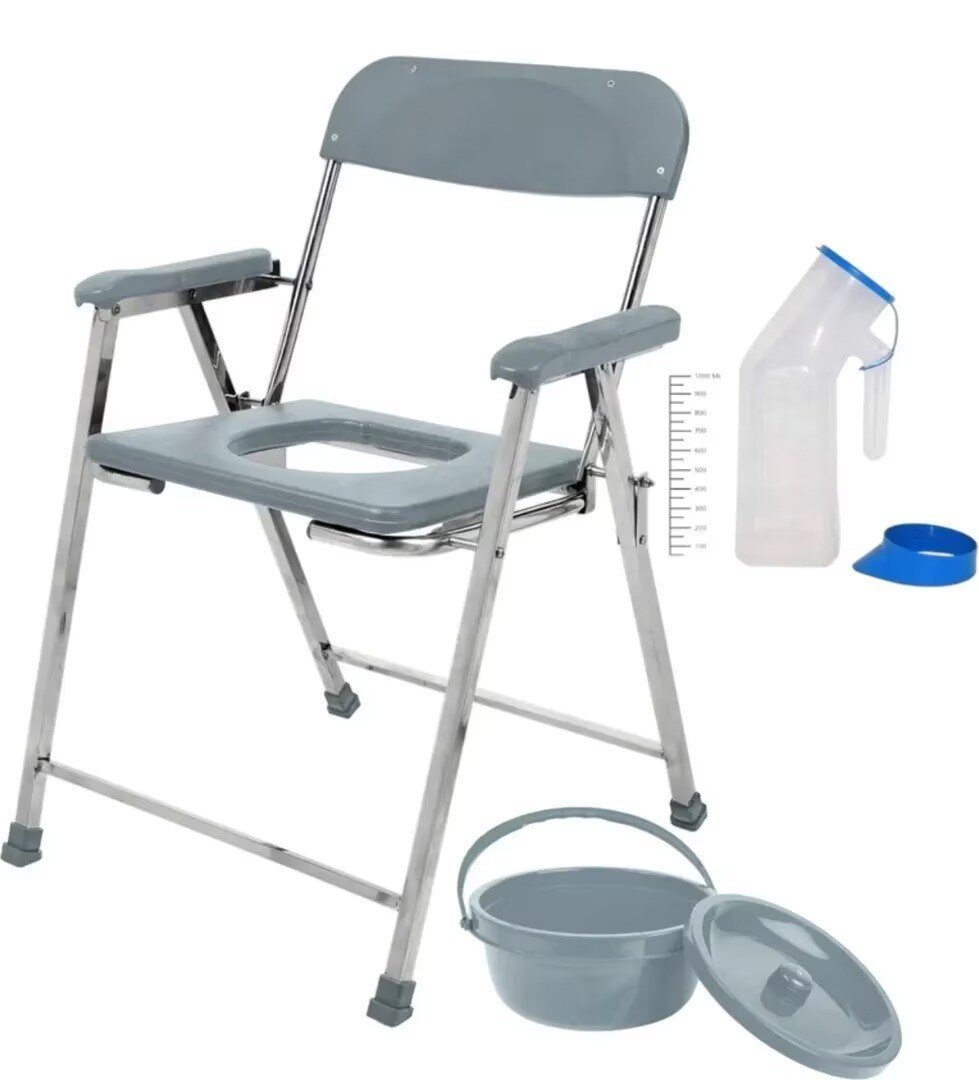
A commode chair usually adds a back support and armrests to the seat, while a commode stool is often a simpler, backless frame over a pail or receptacle. The names are not standardized, so inspect the actual design rather than trusting the label “commode chair versus commode stool.”
| Option | Physical features | Effect on daily use |
|---|---|---|
| Commode chair | Back support, armrests, wider frame, seat and pail | Better trunk support and stability for elderly users; armrests provide handholds for sitting and standing but increase footprint |
| Commode stool | Usually backless, with fewer parts and a lighter frame | Easier to carry and store; requires stronger balance, leg control, and independent sitting |
| Chair with drop or removable arms | Chair back with arms that move aside | Can support a lateral wheelchair transfer, provided the arms lock securely and leave no gap or pinch point |
A chair is usually the safer starting point for weak grip, poor balance, weak legs, or limited trunk control. Non-slip feet and a level, rigid frame matter more than the product name; a rocking frame can tip during a transfer.
A stool suits someone who can sit, stand, turn, and follow instructions without leaning heavily on the frame. Fixed armrests can obstruct a close wheelchair, hoist, or caregiver-assisted lateral transfer, while a backless stool offers less protection against sideways or backward loss of balance.
If the user cannot maintain sitting balance or bear enough weight, seek a clinician’s assessment before choosing either option.
Which option matches the user’s strength, balance, and transfer ability?
Choose a commode chair when poor balance, weak legs, limited trunk control, or reduced grip strength makes unsupported sitting, standing, or turning unsafe. Its backrest and armrests provide contact points, while non-slip feet reduce sliding. A stool suits someone who can sit upright, rise, and pivot independently or with reliable, light assistance.
| Option | User profile | Transfer implications | Main caution |
|---|---|---|---|
| Commode chair | Weak legs, poor balance, limited trunk control, reduced grip strength, or temporary post-surgery restrictions | Supports a stand-pivot or caregiver-assisted transfer; useful beside the bed when reaching the bathroom is unsafe | Armrests can block a close lateral transfer; choose removable or drop arms only when the transfer plan requires them |
| Commode stool | Good sitting balance, leg strength, grip, and ability to follow instructions | Works for an independent stand-and-pivot transfer | A backless seat offers little protection if the user loses balance |
| Professional assessment | Cannot bear enough weight, remain seated, follow transfer instructions, or communicate reliably | A clinician can select a safer toileting system and transfer method | Dementia care requires supervision when judgment or sequencing is impaired |
Match the frame to the actual transfer, not just the diagnosis. A non-weight-bearing surgery restriction rules out a standing pivot unless the clinical team approves another method. If casters are fitted, lock the brakes before sitting, rising, or transferring; never let the user pull up on a mobile commode unless its instructions permit it.
When the user cannot maintain sitting balance or needs two-person assistance, obtain a professional assessment before buying.
What measurements and specifications must you check before buying?
Measure the user and intended location before buying. A poor fit can cause sliding, heavy dropping, or a frame that cannot pass through the door. Record:
- Commode seat height: compare it with the user’s knee height and ability to place both feet firmly on the floor or foot supports.
- Seat width and depth: allow hip room without leaving the thighs unsupported.
- Opening dimensions: ensure clearance without making the opening so large that the buttocks or thighs lose support.
- Toilet height: check this for over-toilet use, along with leg, bucket-support, and frame clearance.
- Bathroom doorway width and floor clearance: include space for turning, a walker, or a caregiver.
- Overall frame width and available bedside clearance.
| Height choice | What to check | Main risk |
|---|---|---|
| Fixed | Confirm the seat height suits the user and toilet before purchase. | An incorrect height cannot be corrected. |
| Adjustable | Set every leg extension equally; push each locking button or pin fully into place. | Unequal or unlocked legs can wobble or collapse. |
Confirm the stated weight capacity against the user’s current weight and the manufacturer’s conditions, including seat width, opening size, caster configuration, and mobile use. A broad frame does not prove bariatric capacity.
Inspect the seat, frame joints, feet, armrests, opening, and locks for secure attachment and level support. For over-toilet use, choose a model labeled for that configuration; removing the bucket alone is not enough. Apply caster brakes before sitting, standing, or transferring.
Where should the commode go, and how should each setup be used?
Place the commode where the user can reach it without twisting, backing up too far, or crossing a cluttered floor. Good bedside commode placement leaves room for the user’s transfer direction, the caregiver’s position, and walker and wheelchair clearance.
| Option | Setup | Safe-use point |
|---|---|---|
| Bedside | Beside the bed, close enough for a controlled pivot | Set the chair on level flooring, lock caster brakes before sitting or standing, and keep the transfer side clear. |
| Over-the-toilet commode | Over a toilet in a bathroom | Use this only when the manufacturer labels the frame for over-toilet use. Confirm that the legs, bucket supports, and frame clear the toilet, sit level, and do not rock. |
| Standalone | In an accessible room away from the toilet | Treat it as a fixed destination, not a walking aid. Provide a clear approach and enough space for the user and caregiver to turn. |
Measure the route, not just the destination. Check the doorway, turning space, toilet-side clearance, and the distance needed for a walker or wheelchair to approach without forcing a reach. Keep the walker positioned on the user’s stronger transfer side, and never use a towel rail or a rolling commode to pull up.
A caregiver should stand on the user’s weaker side when appropriate, follow the prescribed transfer method, and avoid blocking the exit route. Empty a pail promptly; carrying a full container across the room increases spill risk.
What should you confirm when comparing products for home care?
Confirm the manufacturer’s label, cleaning method, and transfer safety before choosing home-care medical equipment. Check the commode chair weight capacity against the user’s current weight and the stated conditions of use; a wide frame does not prove bariatric capacity.
| Check | Confirm before buying | Why it matters |
|---|---|---|
| Manufacturer label | Weight limit, seat width, opening size, caster configuration, and mobile-commode limits | The capacity can change with the setup |
| Stability | Rubber feet and locking mechanisms; equal leg heights with pins fully engaged | A wet floor, unlocked caster, or uneven leg can cause a slide or tip |
| Pail system | Removable pail cleaning, a secure handle, splash guard, and lid if supplied | A full container is difficult to carry without spills |
| Transfer support | Armrests, back support, footrests, and compatibility with the user’s walker or transfer board | Do not use a mobile commode as a walking aid or pull-up support |
| Skin protection | Smooth, intact seat surfaces and no sharp edges; inspect skin after prolonged sitting | Moisture, pressure, and damaged upholstery can cause irritation or breakdown |
Apply caster brakes before sitting, standing, or transferring. Keep both feet on the floor or intended supports, and dry urine or water immediately.
Empty the pail promptly into the toilet using its handle, then clean and disinfect the pail, splash guard, seat, frame, and transfer-touch surfaces according to the instructions. V. Karan Pharma can help compare available equipment against the user’s seat height, width, weight, doorway, and transfer measurements rather than relying on appearance alone.
Related product
 | Rent Base Products V Karan Pharma, Kalwa Thane, is a dependable supplier of wheelchairs and commode chairs. View product → |
Frequently asked questions
How does a commode chair differ from a commode stool?
A commode chair usually has a backrest and armrests, while a commode stool is often a simpler backless frame over a pail or receptacle. Labels vary, so inspect the actual design.
Which option suits an elderly user with weak balance?
A chair with a backrest, armrests, stable legs, and secure rubber tips offers more support. A stool suits users who can sit, balance, and transfer without arm support.
What measurements should you check before buying a commode?
Check seat width and height, maximum user weight, frame depth, bucket dimensions, doorway clearance, and whether the seat height adjusts to the user’s knees and feet.
Where should you place and use a commode?
Place it near the bed on a level, unobstructed floor. Lock or secure adjustable parts, keep both feet supported, and empty and clean the receptacle promptly after use.
What should you compare between commode products?
Compare frame stability, weight capacity, seat dimensions, height adjustment, armrests, rubber tips, bucket removal, splash protection, cleaning access, and replacement-part availability.